Quick Answer
Home inspections in the Florida Keys cover more ground than a typical mainland inspection. Salt air, spalling concrete, seawalls, and insurance requirements all add layers that buyers need to understand before closing. A general inspection is a starting point — not the whole picture.
By Jim Signor, Realtor — LoKation Real Estate
 Thinking about buying a home in the Florida Keys? Then let’s talk about home inspections — because buying here in paradise isn’t like buying anywhere else.
Salt air, spalling concrete, insurance quirks, and coastal construction all bring unique challenges. Whether you’re buying a weekend retreat or a full-time residence, your inspection experience will likely look different than what you’re used to on the mainland.
As someone who’s helped buyers from Key Largo to Key West, I’ve seen the same concerns pop up again and again. Here’s what you should know before, during, and after the inspection process.
Watch: What Florida Keys Home Buyers Should Know About Home Inspections
A home inspection isn’t a pass-or-fail test.
It’s a snapshot in time — an evaluation of the home’s condition. It’s meant to help you make an informed decision, not to scare you off.
Most reports include dozens of findings. Some are important, many are minor. You’ll see things like dirty air conditioning components, inadequate GFCI outlets, and other common items. These are usually easy to address.
Conditions we commonly look for in the Keys
Seawalls
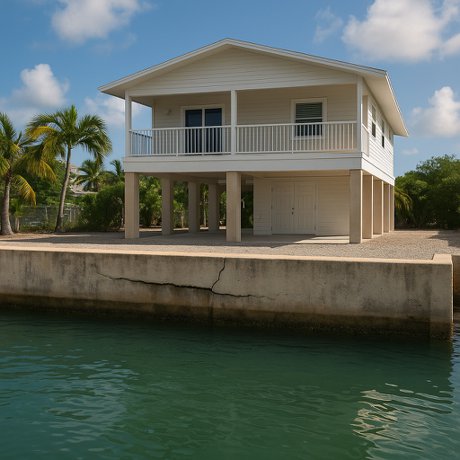 If the home has a seawall, you may want to upgrade your inspection to include a closer look — this is usually an add-on expense.
Cracking, sloping, or erosion behind the wall can be more than just visual concerns. They may indicate structural issues that shouldn’t be ignored. The repair might not be urgent, but it’s definitely something to plan for.
It’s uncommon for a seller to offer a major concession for seawall repair during negotiation. Seawalls can last for years — sometimes decades — after issues first appear, but they can be expensive to fix down the line. The buyer’s intended use of the property (like adding a boat lift or docking a very large vessel) may affect how concerned they should be.
Spalling
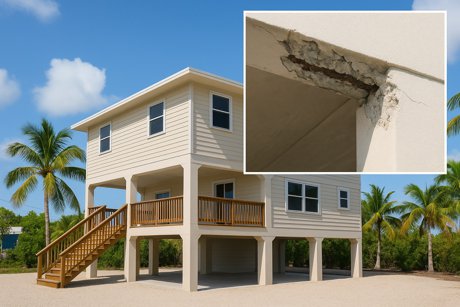
Spalling isn’t just limited to seawalls. You’ll sometimes see flaking concrete at the roof edge or on support columns. It’s repairable, but understanding the scope and timing matters. Surface issues often show long before structural ones — but they shouldn’t be ignored.
Termites and WDOs
In Monroe County, termites are a real possibility. An inspection for wood-destroying organisms (WDOs) looks for active infestations, damage from past activity, signs of prior treatment, and conditions that promote decay, like wood rot or fungal growth.
WDO inspections are not typically included with a general home inspection unless the inspector is separately licensed. That said, many inspectors will flag areas that warrant further evaluation.
Insurance Inspections
Two reports come up regularly: the 4-point inspection and wind mitigation.
4-Point Inspection
This report focuses on four major systems:
- Roof
- Electrical
- Plumbing
- HVAC
It’s commonly required by insurance carriers as homes reach a certain age or when switching providers.
Wind Mitigation
A wind mitigation report may help reduce your insurance premiums. It analyzes how well the home is built to withstand storms, evaluating features such as:
- Impact-resistant windows and doors
- Roof shape and covering
- Roof-to-wall connectors (clips, straps, etc.)
These reports are often ordered alongside the main inspection to save time and money.
Should you attend the inspection?
If at all possible, yes. Inspections can take several hours, and showing up near the end gives you a chance to walk through the findings face-to-face. Hearing the inspector’s explanation in their own words, while everything’s still fresh, gives you context that’s hard to get from the written report alone.
Once the report is in?
You typically have three options:
- Move forward as-is
- Request specific repairs or credits
- Cancel the contract, if warranted
In most cases, buyers proceed without asking for changes, unless something significant comes up that wasn’t visible during the initial showing. The goal is to understand what you’re buying — the good and the less-than-good — and feel confident moving forward.
Need help making sense of it all?
I’m Jim, with LoKation Real Estate. If you’re buying from Key Largo to Key West, I’m here to help you navigate the inspection process, connect with the right professionals, and move forward with confidence.
→ Contact Jim Signor
→ More Florida Keys Buying Tips
Frequently Asked Questions
Do Florida Keys home inspections include seawalls?
No. Seawalls are typically excluded from general home inspections and require a separate evaluation, often for an additional fee.
What is a 4-point inspection?
A 4-point inspection evaluates the roof, HVAC, plumbing, and electrical systems. It’s often required by insurance companies for older homes.
What is concrete spalling?
Spalling refers to cracked, flaking, or deteriorating concrete — commonly seen on seawalls, roof edges, and support columns in the Florida Keys.