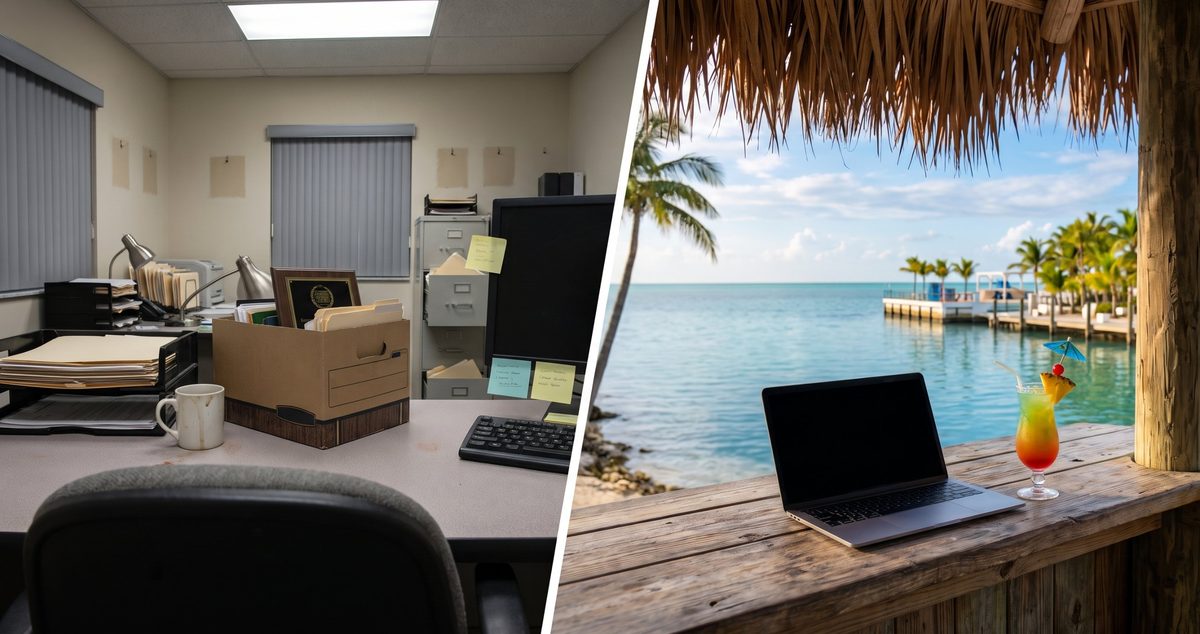
Switching brokerages in the Florida Keys follows the same state rules as anywhere else in Florida. What’s different here is how small the market is. Your old broker, your new broker, and the agent on the other side of your next deal probably all know each other.
I’ve made this move more than once in a career that started in 1988, from Century 21 to Sotheby’s International Realty, with RE/MAX and Coldwell Banker in between. Here’s how the license transfer works, how to time it, and how to handle your listings, buyer agreements, and pending deals without leaving money or goodwill behind. Whether you sell Key Largo real estate or work all the way down to Key West, the process is the same.
How a Florida License Transfer Works
Your license number stays with you. What changes is the employer on file with the Florida Department of Business and Professional Regulation (DBPR).
Most transfers are done online. Your new broker adds you through their own DBPR online account, and DBPR says the record updates in real time, so you can go to work right away. A paper form exists, but most agents never need it.
Notice who doesn’t sign: your old broker. The change ends your relationship with the prior firm and activates you with the new one in a single step. You should still tell your broker yourself, in person and in writing, before it happens. Nobody wants to hear it secondhand.
Timing Your Move
The perfect time to move is when nothing is in the air, which in real estate almost never happens. So plan around your pipeline instead.
Look hard at your closing dates and when your current listings and buyer agreements expire. If a big deal closes in three weeks, or a key listing is about to renew, waiting may be worth it. Line up your new broker first, then pick your day.
If you’re getting the itch, or better yet, long before you ever do, be proactive about the expiration dates you put on new listing and buyer agreements. When I was with other brokerages, I set mine for either July 4 or December 31. They’re easy to remember, and they give you and your client a natural point to decide what comes next, without asking anyone for a release. Just make sure you stay in compliance with your current independent contractor agreement.
Listings and Buyer Agreements Belong to the Brokerage
This is the part that surprises newer agents. In Florida, a listing agreement is a contract between the seller and the brokerage, not you personally. A signed buyer agreement works the same way, and with written buyer agreements now standard, most agents who move today have both kinds to sort out. When you leave, those contracts stay with your old firm unless your broker agrees to let them go.
Plenty of brokers will let a listing or buyer agreement go when the client wants to follow the agent. Some won’t. Some will, in exchange for a referral fee. A lot depends on office policy and the relationship you’ve built with your broker.
The client has a say too. A listing can move to your new brokerage one of two ways. Your old broker signs an assignment, or your old broker signs a release and cancellation, and you and the seller sign a fresh listing agreement. Which route you take depends on the brokerages and what the agreement says. Buyer agreements work the same way. Your MLS can tell you how they handle moving the listing itself. Whatever happens, keep the client first. A messy handoff costs you more in a small market than any one commission is worth.
Spend a few bucks on a real estate attorney. Talk through the issues and the ramifications, and have the release and transfer documents drawn up by a pro. Don’t leave that paperwork to your soon-to-be former brokerage.
Pending Deals and Your Commission
Contracts already under way stay with the brokerage that holds them. If your old broker is holding the escrow deposit, it stays in that broker’s escrow account. The commission is paid to that brokerage at closing.
In practice, switching midstream usually isn’t a problem. Many brokers let a departing agent stay involved through closing and pay the agent’s share when the deal closes. The best time to settle how pending deals are handled if you leave is when you sign your independent contractor agreement, long before you ever think about moving.
That same agreement decides how much you get. The Florida Realtors sample agreement, for example, has the broker pay what you earned before termination, minus anything you owe the broker and what it costs to pay another licensee to complete your pending transactions. Your company’s agreement may read very differently, so read it before you give notice, not after.
If there’s a dispute, it’s generally a civil matter between you and the broker, not something the Florida Real Estate Commission will collect for you. One more reason to leave on good terms.
Stay in Control of Your Business
Even as a broker-owner, I told my agents the truth: nothing lasts forever. You’re an independent contractor, and you should stay in control of your own business.
A franchise rep once pitched me on the value of “golden handcuffs,” making it hard for agents to leave. That was never my style. Agents should stay with a company because it’s the right fit, not because leaving hurts.
Control starts with the basics, such as your own domain name and website, email address, CRM, and phone number. When those are yours, a brokerage change is a paperwork step, not a rebuild.
Before You Make the Call
- Read your independent contractor agreement, especially pay after termination and notice requirements.
- List every active listing, buyer agreement, and pending deal, with closing and expiration dates.
- Ask your new broker how they handle listings and buyer agreements that follow an agent.
- Plan updates to your signs, cards, email signature, website, and social profiles. Florida requires your advertising to include your brokerage’s licensed name.
- Ask your Realtor association and MLS what they need to move your membership.
- After the change, look yourself up through the DBPR Division of Real Estate license search to confirm your new employer shows.
Where I Landed
After all those brands, I’m a Realtor with LoKation Real Estate. I pay $99 a month and $99 per transaction side, and I keep 100% of my commission. LoKation reports over 5,000 agents and ranks among the 10 largest independent brokerages in the U.S.
Because LoKation isn’t built to collect a big percentage of your commission, there’s nothing to fight over when you leave. You pay the $99 transaction fee on any pending closings, and they make the transfer easy. They’ll also let you know the door is always open if you want to come back.
I share the full picture in my LoKation Real Estate review. If you’re ready to join, you can use my LoKation referral link. Full disclosure: LoKation pays me a small referral credit if you join through it.
Still weighing it? Call me at 305-394-4449 or find me at jimsignor.com. Agent to agent, I’m happy to tell you what a move really looks like. You can also read more about my background as a Florida Keys Realtor.
Jim Signor - Florida Keys Real Estate
Frequently Asked Questions
How do you transfer a Florida real estate license to a new broker?
Most transfers are done online. Your new employing broker adds you through their DBPR online account, and DBPR says the record updates in real time. Your former broker does not need to sign or approve the change.
When is the best time to switch real estate brokerages?
When your pipeline is quiet. Agents often plan a move around upcoming closings and the expiration dates on their listing and buyer agreements, and some set those agreements to expire on fixed, easy-to-remember dates.
Do listings go with an agent who changes brokerages?
Not automatically. In Florida, listing agreements and signed buyer agreements are contracts with the brokerage, not the individual agent. A former broker may release them, keep them and assign another agent, or agree to a referral arrangement, and the client has a say in the outcome.
Do you still get paid on pending deals after switching brokerages?
Generally, yes. Pending transactions stay with the former brokerage, which pays your share at closing under your independent contractor agreement. That agreement may allow deductions if another agent has to help finish the transaction.