What Florida Keys Homebuyers Should Know About Conservation Easements and Environmental Deed Restrictions
If you're shopping for a home in the Florida Keys—especially newer homes in tree-filled neighborhoods—there’s something you need to be aware of: conservation easements, also commonly referred to as environmental deed restrictions.
These are legal agreements tied to a property’s deed that protect certain trees and native vegetation from being removed or altered. They’re especially common in the Florida Keys, where preserving natural habitats is a priority. While the term “environmental deed restriction” is widely used in conversation, the more accurate term used by local agencies and in official documents is often conservation easement.
If the property you’re considering is relatively new and surrounded by native trees, there's a good chance that one of these restrictions applies—and you’ll want to know the implications before you buy.
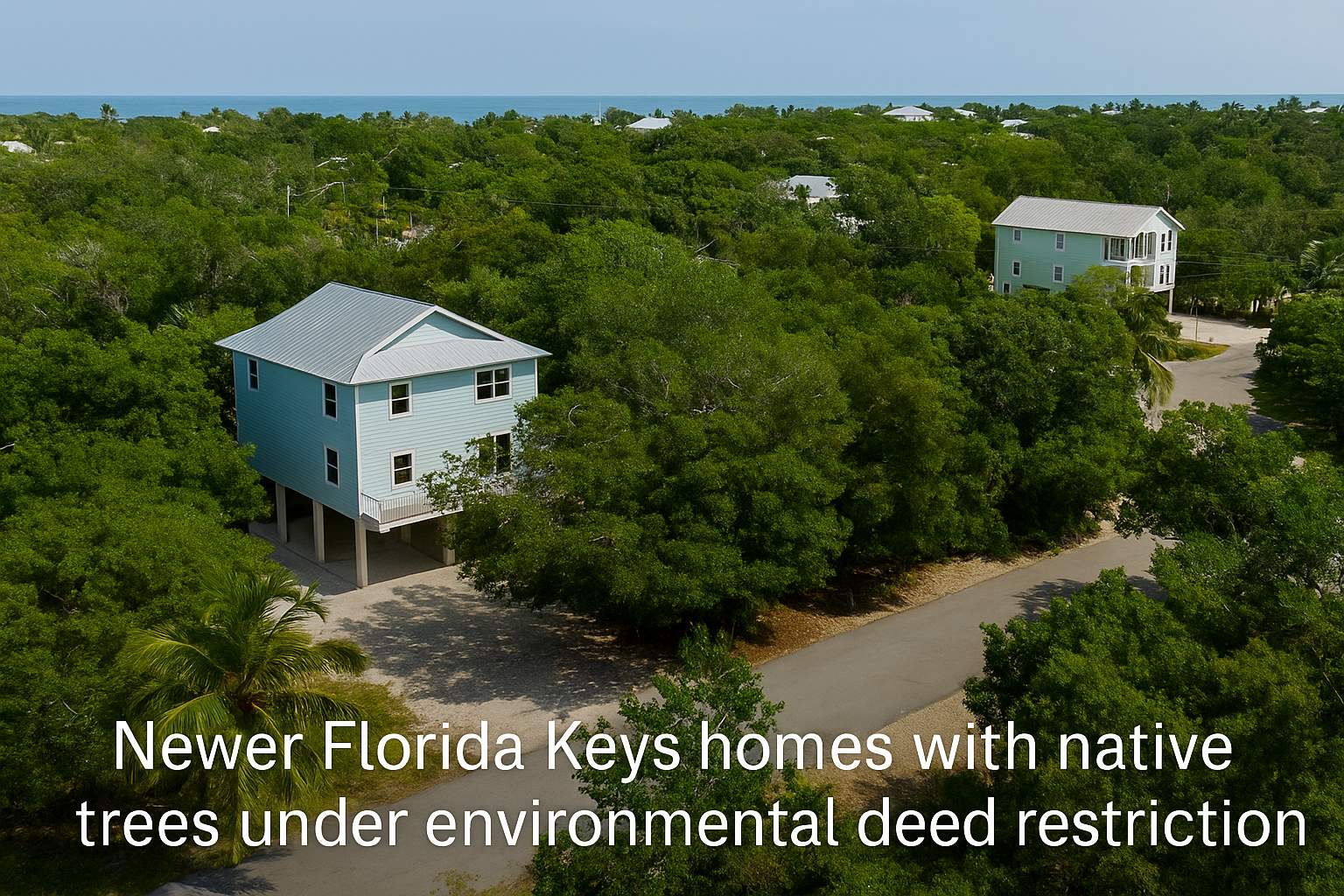
A newer stilted home in the Florida Keys, surrounded by native trees and tropical vegetation
These restrictions are common in the Keys due to local efforts to preserve native vegetation and protect the fragile island ecosystem. While they may seem like a small detail, they can significantly impact how you use and enjoy your property.
Whether you're looking in Key Largo, Islamorada, Marathon, the Lower Florida Keys or other islands in Monroe County, here’s what you need to know about environmental deed restrictions in the Florida Keys—the pros, the cons, and what to watch for before making a purchase.
What Are Environmental Deed Restrictions?
Environmental deed restrictions, often part of a conservation easement, are legal limitations that are recorded in the public record and associated with the property. These restrictions typically require certain trees and native vegetation to remain in place. In most cases, homeowners cannot remove or alter protected vegetation without obtaining approval from local environmental authorities.
These restrictions are most common on:
- Newer homes built in the last 20 years
- Properties in wooded or heavily treed neighborhoods
- Lots that required environmental permitting before development
Why Do These Restrictions Exist?
The Florida Keys have a delicate and unique ecosystem. Local governments and environmental authorities require preservation of native trees and vegetation to:
- Prevent erosion and flooding
- Support local wildlife
- Preserve the natural beauty of the islands
- Offset the impact of new development
These rules are meant to protect both the environment and the long-term appeal of the area.
How to Tell if a Property Has Environmental Deed Restrictions (Conservation Easement)
Watch for these signs:
1. It’s a Newer Home Surrounded by Trees
If the home was built in the last couple of decades and still has mature native vegetation on-site, there’s a good chance restrictions are in place.
2. The Listing Mentions Conservation Easement
Look for terms like “preservation area,” “vegetation easement,” or “tree removal restrictions.” These are key indicators.
3. A Vegetation Management Plan Exists
Some properties have documentation detailing what must remain untouched. Your agent can help you obtain and review this information.
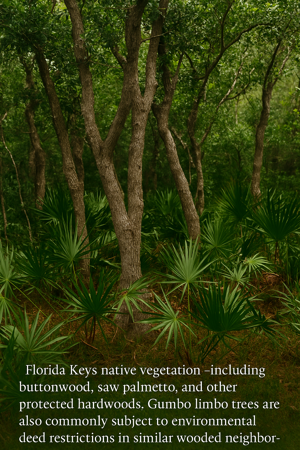
Pros of Environmental Deed Restrictions
- Natural beauty is preserved: Homes in these areas typically feature lush, mature foliage that adds value and curb appeal.
- Privacy and shade: Trees offer a natural buffer and reduce sunlight exposure, lowering energy bills.
- Environmentally responsible: Buyers contribute to protecting the unique ecosystem of the Florida Keys.
Cons of Environmental Deed Restrictions
- Limited landscaping flexibility: You may not be able to clear space for additions, pools, or patios.
- No tree removal without approval: Removing protected trees typically requires a permit—and it may be denied or require mitigation.
- Maintenance is still your responsibility: You must maintain protected vegetation, even though you can’t remove it.
What Should You Do Before You Buy?
If you’re considering a home in the Florida Keys, especially one that’s newer or surrounded by trees, be proactive:
- Ask your real estate agent about environmental deed restrictions
- Review the property’s deed and environmental permits
- Request a vegetation or site management plan, if available
- Understand that clearing space—even for basic landscaping—may not be possible
A good real estate agent has the vision and experience to recognize when these restrictions are likely and will proactively discuss them with you. You should never be surprised by these limitations after making an offer or closing on a property.
 Understanding local regulations starts with the right agent
Work With a Local Expert Who Knows the Rules
Environmental deed restrictions aren’t a deal-breaker—but they are something every buyer should understand. The key is having the right information before you buy.
I’ve helped many buyers navigate these regulations and avoid unexpected issues. As a local agent who knows what to look for, I’ll make sure you get all the facts up front—and help you make a confident, well-informed purchase in the Florida Keys.
➡️ Have questions? Contact me directly at JimSignor.com