This post reflects mortgage rates reported on September 30, 2026. Rates change daily, sometimes hourly. Treat these figures as a snapshot in time, not a rate quote. The trend is what matters.
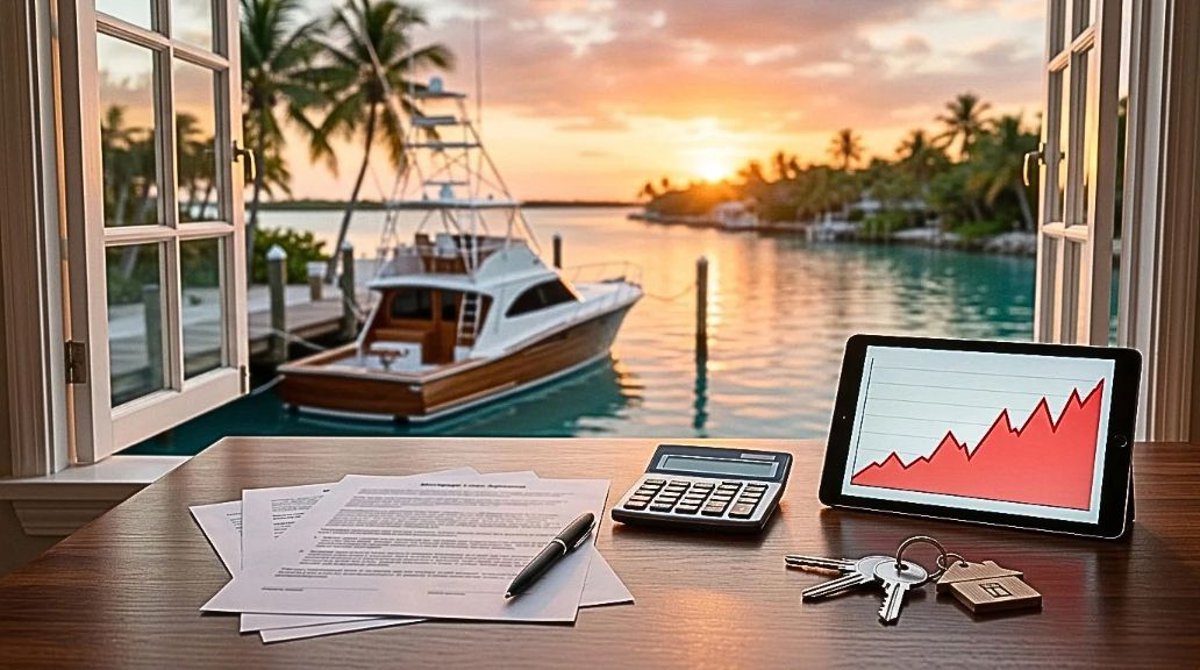
Rates are up, and that changes the math for every Keys buyer and seller. Here’s how to make it work for you, including why a seller-paid buydown can beat a price cut by a mile.
What Higher Rates Mean for Florida Keys Real Estate
Higher rates raise the cost of every financed purchase. In the Keys, where prices run well above the national average, that adds up fast, especially on the jumbo loans many purchases here require.
Still, from Key Largo and Islamorada to Marathon and Key West, the Keys don’t react to rates the way most markets do. Some buyers pay cash, and many are shopping for a second home rather than a place they need to live. For them, rates shape the decision but rarely make it.
Where higher rates do show up is in the details: fewer financed buyers at showings, longer negotiations, and more room for both sides to get creative. That’s where the opportunity is, for buyers and sellers alike.
A Word to Buyers
Think waiting for lower rates will save you money?
So does everyone else. When rates drop, buyers who’ve been waiting tend to come back. More competition can push prices up, and the money you save on the rate could end up spent on the price.
Meanwhile, the boat rides, sunsets, and slow mornings you’re waiting for keep happening without you. A home on the water is a choice about how you want to spend the years you have.
A high-rate market can actually work in your favor. When rates climb, some buyers step back. Sellers see fewer showings and fewer offers. That shifts negotiating power toward the buyers who stay active. If you’re ready to be one of them, here’s more on buying a home in the Florida Keys.
Here’s how to make the most of it:
- Buy what works at today’s rate. Know your number before you shop, and make sure the payment works now. If rates fall later, refinancing is a bonus, not the plan.
- Be selective. With less competition, you have time to find the right home, not just an available one.
- Make strong, well-supported offers. Don’t be shy about offering below asking when comparable sales back you up. A well-documented offer gets taken seriously.
- Know your loan type. Second homes and investment properties often carry slightly higher rates than primary residences. Jumbo loans averaged 7.60% on September 30, according to Forbes Advisor. Factor that into your budget early.
Why pay more than you have to? I’m also a licensed mortgage loan originator with LoKation Mortgage. If you already have a quote from another lender, LoKation Mortgage’s Take a Second Look offer lets you compare before you commit. Start at KeysLender.com.
Buying a Keys rental? Ask about a DSCR loan. It qualifies the property on its rental income instead of your personal income. Rental rules vary across the Keys and affect what a lender can count, so as a DSCR lender in the Florida Keys, I can help you sort that out before you make an offer.
A Word to Sellers
Times have changed. The frenzy of the recent boom, when a well-kept home could draw multiple offers in a weekend, is behind us. Buyers today have more choices and less urgency, and many of them are watching rates closely.
The basics still matter: smart pricing, strong presentation, and a pre-inspected, certified home. You’ll find those covered on my page about selling your Florida Keys home. Here, the focus is on what’s changed: rates.
How to adapt:
- Think in payments, not just price. Financed buyers shop by monthly payment. Price your home with what that payment looks like at today’s rates.
- Offer a rate buydown. Instead of cutting your price, help the buyer lower their payment.
- Market the payment. Put the buydown in the listing headline, the MLS remarks, and every social post. A buyer scrolling past a price reduction may not notice. A buyer who sees a lower payment usually does.
- Work within the buyer’s rate lock. Most rate locks last 30 to 60 days. A closing date that fits inside that window protects the buyer’s rate, and your deal.
If Your Home Isn’t Selling
When a listing sits, the reflex advice is to drop the price. Sometimes that’s the right call. But a price cut is a blunt tool. It shrinks your proceeds, and for a financed buyer, it barely moves the monthly payment.
A buydown speaks directly to the buyers who are hesitating because of rates. And because it’s funded from your proceeds at closing, there’s no check to write up front. The example below shows why the math often favors it.
How a Rate Buydown Works: A $600,000 Example
A buydown is money paid at closing, often by the seller, to lower the buyer’s interest rate for a set period. One common version is the 2-1 buydown. The rate drops two points in year one, one point in year two, then returns to the full rate for the life of the loan.
Here’s how that looks on a $600,000, 30-year fixed loan at 7.46%, the national average reported on September 30:
| Loan Year | Rate | Monthly P&I | Monthly Savings |
|---|---|---|---|
| Year 1 | 5.46% | About $3,390 | About $790 |
| Year 2 | 6.46% | About $3,775 | About $405 |
| Years 3 to 30 | 7.46% | About $4,180 | None |
The buyer gets roughly $14,300 in payment savings over the first two years. The seller’s concession to fund it would be close to that amount, with the lender calculating the exact figure based on the loan terms.
Now compare that to a $14,300 price reduction. On a loan this size, a price cut that big lowers the monthly payment by only about $100.
The two tools do different jobs. A price cut permanently lowers the purchase price and loan balance. A buydown delivers far more payment relief in the first two years, when buyers feel the payment most, before the rate returns to the full note rate.
Buydown rules vary by loan type and occupancy, seller contributions are capped, and buyers typically still need to qualify at the full rate. Talk with your lender before building one into an offer. Figures shown are principal and interest only and are for illustration.
The Numbers Behind the Headlines
Want the national numbers? Forbes Advisor’s daily rate report covers them well, and its headline says it all:
“Thirty-year mortgage rates hit a one-year high today.”
Your time is valuable, so we’ll leave the details to them. The short version: by Freddie Mac’s weekly measure, rates are at their highest since early 2025, and the Federal Reserve raised its benchmark rate a quarter point in September. Mortgage rates don’t move in lockstep with the Fed, but the recent trend is unmistakable.
Nationally, higher rates do two things. They price some buyers out, and they keep many owners in place. Millions of homeowners locked in very low rates in the years after COVID, and many would rather stay put than trade that rate for today’s. That keeps homes off the market and slows sales from both directions.
The Bottom Line
Rates are high, and they’re making news. Nationally, that can cool the housing market. In the Keys, the effect is real but different, and it creates openings on both sides of the deal.
Buyers who stay active may find more room to negotiate. Sellers who adapt with smart pricing and creative terms can still close. The ones who struggle will be those waiting for the boom to come back.
Frequently Asked Questions
How do high mortgage rates affect the Florida Keys real estate market?
High rates reduce affordability for financed buyers nationwide, but the Florida Keys market includes many cash buyers, high-income buyers, and second-home buyers, particularly at higher price points. For many Keys buyers, the decision is driven as much by lifestyle as by interest rates.
Should I wait for mortgage rates to drop before buying in the Florida Keys?
No one can reliably predict when or how far rates will fall. Buyers who purchase during a high-rate period may face less competition and more room to negotiate, and refinancing may be possible if rates decline later. If the payment doesn’t work comfortably at today’s rate, waiting or choosing a less expensive property can also make sense.
My Florida Keys home isn’t selling. What should I do?
A price reduction is the most common response, but it isn’t the only option. In a high-rate market, sellers can fund a mortgage rate buydown at closing, market the lower monthly payment, and time the closing to fit the buyer’s rate lock. A buydown can lower a financed buyer’s monthly payment more in the early years of the loan than a price cut of the same cost.
Can I get a DSCR loan in the Florida Keys?
Yes. DSCR (debt service coverage ratio) loans are available for Florida Keys investment properties. A DSCR loan qualifies the property based on its rental income compared with its monthly debt payments, rather than the borrower’s personal income. Because vacation rental rules vary by location in the Florida Keys, a property’s allowable rental use affects how much income a lender can count.
Jim Signor - Florida Keys Real Estate
Broker-Associate, LoKation Real Estate
Licensed Mortgage Loan Originator, LoKation Mortgage, NMLS #2773431
Call or text 305-394-4449 | [email protected] | KeysLender.com